.svg)
Business data for insurance prospecting (2026)
TL;DR
Explore data sources and directories for business research. Compare company coverage, locations, available business details, and workflows.
Quick answer. Openmart finds the owner behind the business. Other sources find businesses or licenses, not decision-makers.
Ranked from most to least targeted for insurance prospecting:
- Openmart's local business database — best for verified owner contacts with revenue, employee count, and fleet indicators. Coverage depth varies by market and trade.
- Trade-specific contractor directories — best for confirming trade and license status. Little owner contact or firmographic data.
- General B2B contact databases — best for deep firmographics on larger accounts. Shallow trade classification for small contractors.
- Free state licensing boards — best for zero-cost license verification. No phone or email, so it can't drive outreach.
Why generic contact lists fail commercial insurance prospecting
A generic contact list gives you a name, a phone number, and a company, but none of the inputs that decide whether a commercial account is worth a call. Commercial lines underwriting runs on fleet size, payroll, and annual revenue. A list stripped of those signals forces you to research each prospect by hand before you dial, which is where most prospecting hours disappear.
Consider a roofing contractor pulled from a scraped directory. You know the business exists, but you don't know whether it runs three trucks or thirty, employs four people or forty, or books half a million in revenue or five million. Those numbers set the premium and tell you whether the account fits your appetite. Without them, every call starts cold, and you qualify on the fly instead of walking in with a reason to talk.
The problem compounds when the contact isn't the decision-maker. Reaching a front-desk line or a general info address means another round of gatekeeping before you find the owner who signs the policy. Owner-operated local businesses concentrate that authority in one person, so a list that surfaces the owner directly removes the slowest step.
Firmographic-enriched, owner-level data solves both problems at once. When revenue, employee count, and fleet indicators sit next to a verified owner contact, you sort by fit and call the person who can buy. That combination carries the rest of this comparison.
When to use each method
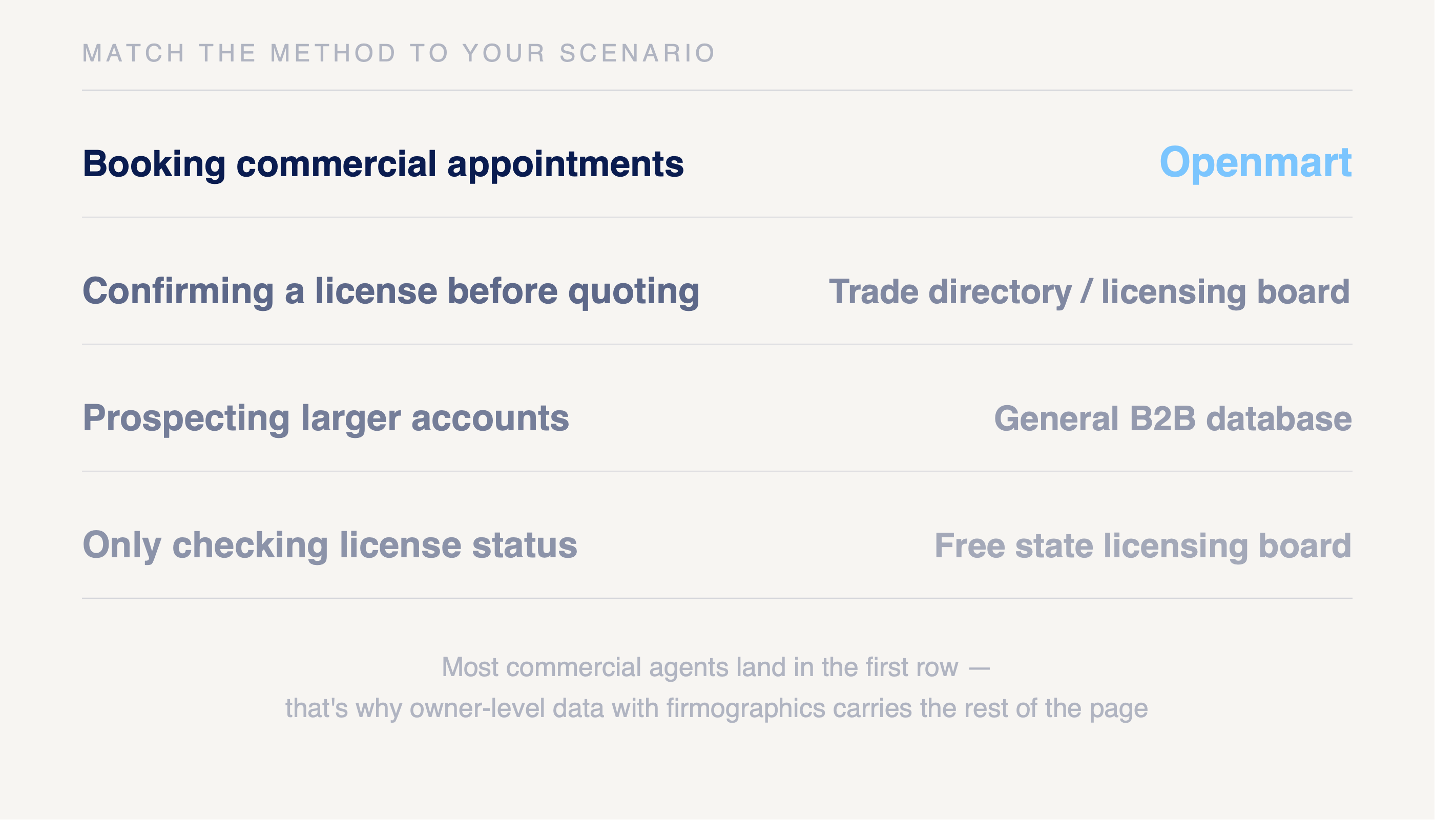
Match your prospecting method to the outreach you actually run, not to whichever list is cheapest to pull.
You book commercial appointments and need to prioritize accounts. Use Openmart's local business database. You get the owner's direct contact plus revenue, employee count, and fleet indicators that tell you which businesses are worth a call first.
You need to confirm a contractor's trade or license before quoting. Use a trade-specific directory or a state licensing board. Both verify credentials, but neither hands you a decision-maker's phone number.
You prospect larger accounts and need deep firmographics. Use a general B2B contact database. Revenue bands and headcount run deep, though trade classification for small contractors stays thin.
You only need to check license status. Use a free state licensing board. It costs nothing and confirms whether a license is active, but it won't drive outreach on its own.
Most commercial agents land in the first scenario, which is why owner-level data with firmographic signals carries the rest of this page.
Openmart's local business database
Openmart's local business database starts from the owner, not the company record. For commercial insurance, the owner is the person who signs the policy, and reaching them directly removes the gatekeeper step that stalls most cold outreach. Every listing pairs a verified owner name and contact with the firmographic signals that decide whether an account is worth a call.
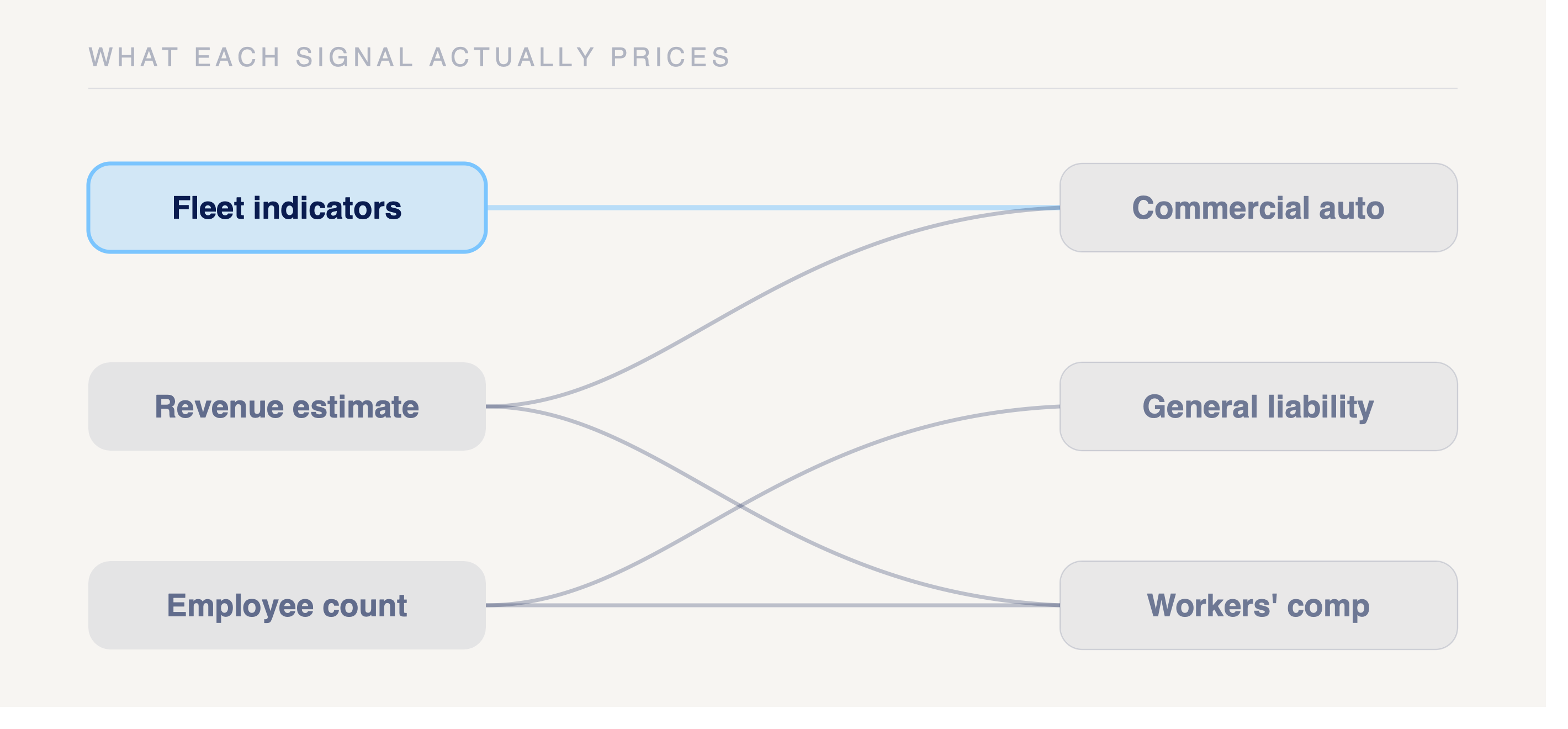
Those signals map straight to how carriers price commercial lines. Revenue estimates and employee counts feed general liability and workers' comp underwriting, so an agent can size the premium opportunity before dialing. Fleet indicators tell you which contractors and service businesses carry commercial auto exposure, which is the difference between a two-line policy and a bundled account worth chasing. A landscaping company with eight trucks and fifteen employees is a different conversation than a solo operator, and the database shows you which is which up front.
That enrichment turns a raw list into a prioritized one. Instead of qualifying each prospect manually on the call, you filter for the revenue band, headcount, and fleet profile that fit your book, then work the shortlist that remains. An HVAC agent can pull every mid-size contractor in a metro with a company vehicle and a payroll that clears the workers' comp threshold, then start outreach the same day.
Coverage runs deep in dense local markets and common trades like construction, hospitality, and auto services. It thins out in rural areas and in narrow, license-heavy niches where fewer businesses operate, so a metro search returns more usable leads than a rural county one. Openmart is honest about that variance rather than promising uniform depth everywhere.
To pull a targeted list, filter by city and trade, or search a single business by name with the Business Owner Finder. Both return the same verified owner contact and firmographic profile, so you can build a call list or vet one prospect from the same source.
Trade-specific contractor directories
Trade-specific contractor directories do one job well. They let you filter by trade and confirm license status, so you can pull a clean list of licensed electricians, roofers, or HVAC contractors in a given state. For an agent who needs to verify that a prospect holds an active license before quoting, these directories answer the question quickly.
The problem shows up the moment you try to prioritize that list. A directory tells you a contractor is licensed and what trade they work in, but it rarely names the owner, and it almost never carries revenue, employee count, or fleet indicators. Without those signals, every entry looks identical on paper, and you cannot tell a two-truck operation from a thirty-truck fleet until you dial and ask.
Strong trade classification does not substitute for the data that decides which accounts are worth your time. Commercial lines pricing hinges on payroll, revenue, and vehicles in use, and a trade tag captures none of that. You end up with a directory of names to work through in whatever order they happen to appear, qualifying each one manually before the conversation even starts.
The tradeoff is worth stating plainly. Trade directories are good for confirming a license or a trade classification, and they are weak for building a prioritized call list. Treat them as a verification checkpoint, not the source that fills your pipeline.
General B2B contact databases
General B2B contact databases model companies as org charts, which breaks down the moment you prospect a two-truck plumbing outfit. These tools were built to map departments, job titles, and reporting lines inside larger companies, so their strongest records surface a VP of operations or a procurement manager. A local contractor has none of that structure. The owner answers the phone, signs the policy, and drives one of the trucks, and no org chart captures that person.
Their firmographic depth is genuine, and it works well for mid-market accounts. You get revenue bands, headcount ranges, and industry codes that help you size a larger commercial account before you call. That depth thins out fast for small trades. A three-person roofing company often lands under a broad or inconsistent SIC code, with no fleet indicator and no revenue figure specific enough to gauge exposure.
The contact you actually reach is usually an employee, not the decision-maker who buys the policy. For commercial lines prospecting, that gap costs you the call. Enterprise contact tools are engineered to find stakeholders at companies with stakeholders. Openmart is engineered to find the owner behind an owner-operated business, and for insurance outreach that owner is the only contact worth dialing.
Free state licensing boards
State licensing boards give you a free way to confirm that a contractor or business holds an active license, but they don't sell leads. A typical search returns the business name, the license number, its current status, and sometimes a mailing address. Almost none publish an owner's phone number or email, so you can verify a prospect but you cannot call one.
Use these boards to check that a name from another source is legitimate and currently licensed. If you pull a roofing contractor from a purpose-built database, a quick license lookup confirms the trade classification and flags any suspended or expired credential before you underwrite the account.
Treat licensing boards as a verification layer, not a prospecting method. Pair them with Openmart's insurance database, which supplies the owner contact and firmographic signals the boards leave out. The board tells you a business is real and licensed. The database tells you who to call and why the account is worth your time.
Comparing the four methods
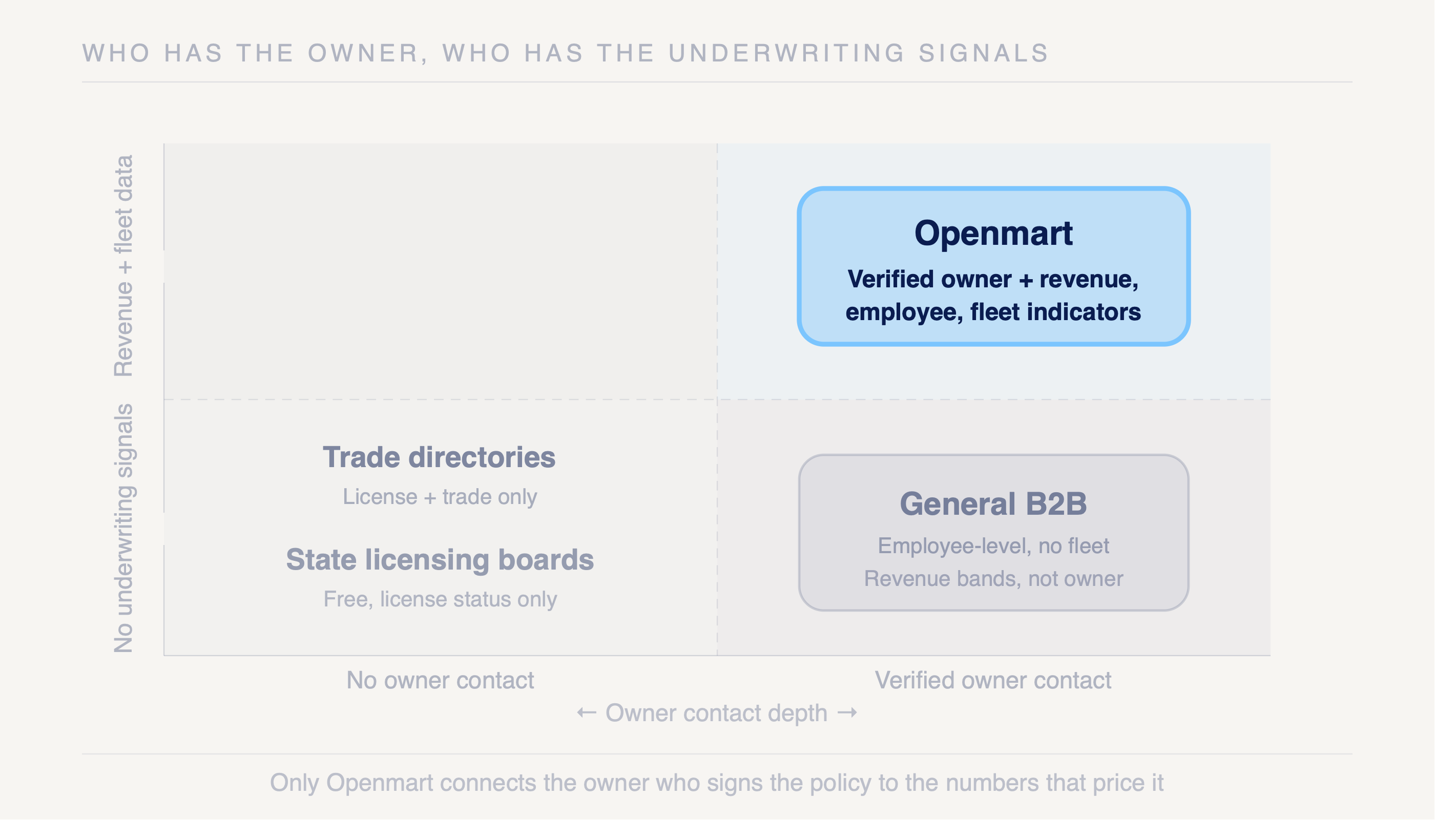
Each method sits somewhere different on the spectrum between contact depth and cost, and the columns below show where each one earns its place and where it leaves you stuck.
| Method | Owner contact | Trade filtering | Revenue/fleet data | Cost | Best for | Watch out for |
|---|---|---|---|---|---|---|
| Openmart local business database | Verified owner name, phone, email | Strong, trade-level filtering | Revenue, employee count, fleet indicators | Paid subscription | Commercial agents building prioritized call lists | Coverage depth varies by market and trade |
| Trade-specific contractor directories | Rare or missing | Strong license and trade filters | None | Low or free | Confirming a contractor's license and trade | No owner contact or firmographics to rank accounts |
| General B2B contact databases | Employee-level, rarely the owner | Shallow or inconsistent for small trades | Revenue bands, headcount | Paid, often enterprise-tier | Prospecting larger, multi-location accounts | Modeled around org charts, not owner-operators |
| Free state licensing boards | None | License status only | None | Free | Verifying license status before outreach | No phone or email, so it cannot drive calls |
Only the purpose-built local business database connects the owner to the revenue and fleet signals a commercial quote needs, which is why the other three work best as verification or enrichment steps rather than your primary source.
FAQs
Where can I find contractor leads for insurance? Trade-specific contractor directories list contractors by license and trade, but most stop at business name and license status. A purpose-built local business database like Openmart's insurance database pairs the same trade coverage with verified owner contacts and revenue signals. That combination lets you build a call list instead of a lookup list.
How do I get verified business owner contact info? Use a database that verifies the owner behind the business rather than an employee at the front desk. Openmart's business owner finder returns the decision-maker's name and contact details alongside firmographic data. Directories and licensing boards rarely include a direct owner phone or email.
Is free licensing data enough for insurance outreach? No. State licensing boards confirm that a business is licensed and active, but they carry no phone or email. Treat licensing data as a verification layer, then pull contact and firmographic data from a purpose-built database to actually reach the owner.
How does fleet and revenue data improve commercial insurance targeting? Fleet size, revenue, and employee count are the same inputs commercial underwriters use to price a policy. Knowing them before you dial lets you prioritize accounts by premium potential and skip businesses too small to write. You qualify the prospect before the first call rather than during it.
What data should an insurance leads database include for commercial auto prospecting? Look for owner contact details, a fleet or vehicle indicator, employee count, and trade classification. Fleet signals tell you which businesses run enough vehicles to justify a commercial auto conversation.
How is a local business database different from a contractor directory for insurance agents? A contractor directory organizes records by license and trade. A local business database organizes records by the owner, adding revenue, headcount, and contact data. The first confirms who is licensed; the second tells you who to call and why.
Can I find insurance leads by fleet size? Yes. Openmart's insurance database flags fleet indicators, so you can filter for businesses running vehicles and route them straight into commercial auto prospecting.
Getting started with verified insurance leads
The right method depends on your scenario, and the four options map cleanly to it. Appointment-focused commercial agents need owner contacts paired with fleet and revenue signals, which is what Openmart's purpose-built data delivers. Trade directories confirm licenses, general B2B databases model employees at large firms, and state boards verify status for free.
Openmart finds the owner behind each local business, not a stakeholder buried in a corporate org chart. Start with the insurance leads database to pull verified owner contacts enriched with revenue, employee count, and fleet indicators. Then use the Business Owner Finder to identify the decision-maker on any account before you dial.
Related articles



Start reaching local businesses today
No credit card required
50M+ local business databases


.png)
